Cart
0
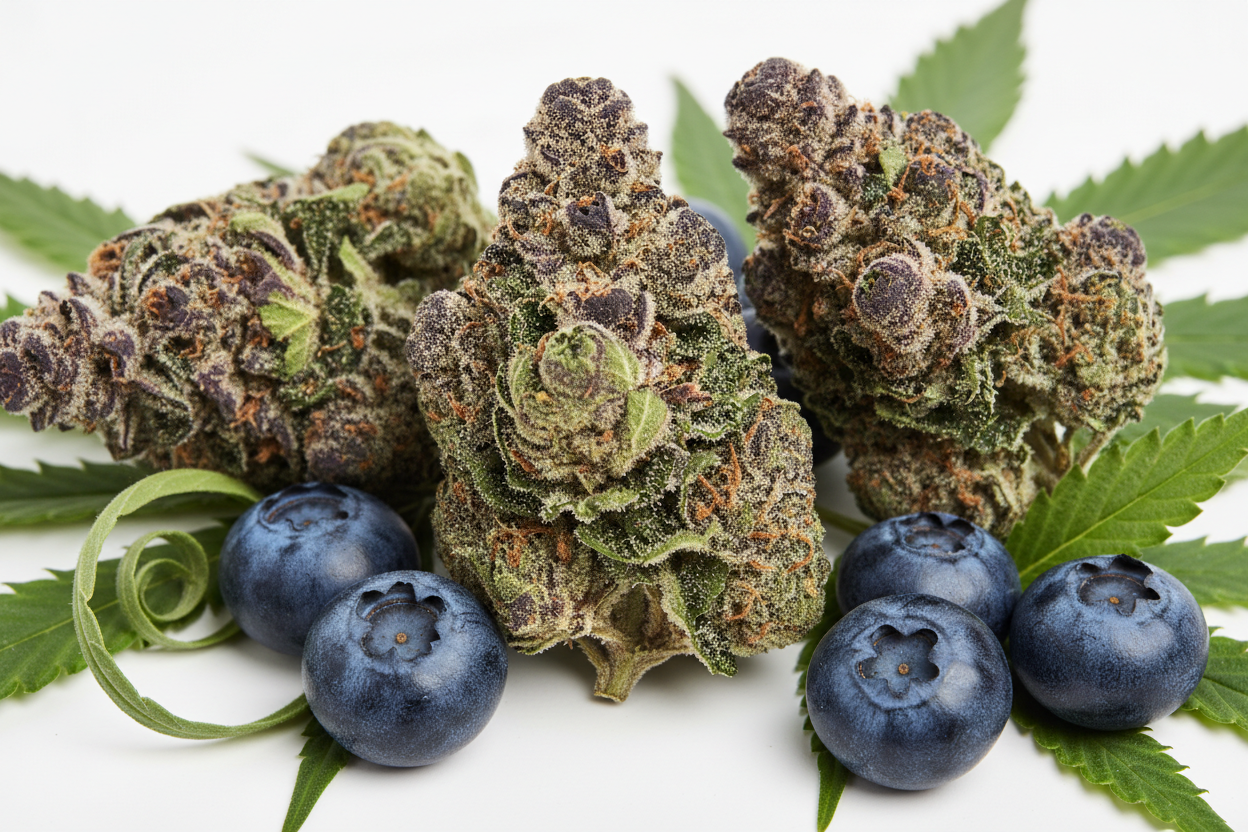
There's a reason blueberry strains have never really gone out of fashion. Since DJ Short first bred the original Blueberry in the late 1970s — crossing Thai and Afghani genetics — that distinctive sweet-fruit profile has been chased by breeders for decades. Now, in the UK CBD flower market, blueberry-dominant hemp strains have become some of the most searched and most purchased options on the shelf. But here's the thing: not all "blueberry" CBD flower is the same, and most of what gets sold under that label trades entirely on the name.
This post breaks down what actually makes a blueberry strain smell and smoke the way it does, what you should be looking for in the UK market, and how to tell a properly grown blueberry CBD flower from a marketing exercise with a fruit sticker slapped on the bag.
It's the Terpenes, Not the Strain Name
Before anything else, it's worth understanding that "blueberry" isn't a certified category. It's a descriptor. The reason a blueberry CBD flower smells like blueberries is almost entirely down to its terpene profile — and specifically a handful of terpenes that work together to produce that recognisable sweet, slightly tangy, berry-forward aroma.
The main players in a well-grown blueberry hemp strain are:
Myrcene — the most abundant terpene in cannabis generally, and the backbone of blueberry strains. Myrcene is earthy and fruity simultaneously; it contributes what most people describe as the "ripe" quality in blueberry strains. Strains with genuinely high myrcene content (typically above 0.5% of the total flower weight) tend to have a heavier, more relaxing character.
Linalool — more commonly associated with lavender, but linalool appears regularly in blueberry-dominant genetics and adds a floral sweetness that rounds out the fruit note. Without it, blueberry strains can smell more like candy than actual berry.
Ocimene — the terpene most responsible for that genuinely sweet, almost tropical fruit quality. If you've smelled a blueberry CBD flower and thought it smelled almost like bubble gum or fruit pastilles, that's ocimene doing the work. High ocimene content is one of the clearest indicators you're looking at genuine blueberry genetics rather than a terpene-sprayed product.
Caryophyllene — brings the subtle spice and earthiness underneath the sweet notes, and is the only terpene that also acts as a dietary cannabinoid by binding to CB2 receptors. It's what stops quality blueberry flower from smelling one-dimensional.
A batch of blueberry CBD flower with a genuine terpene profile will usually show myrcene between 0.4–0.8%, with ocimene and linalool visible in the secondary analysis. If a vendor can't show you lab results that include terpene data, not just cannabinoid percentages, that's a red flag worth taking seriously.
What to Expect From the Smoke

Blueberry-dominant CBD flower sits firmly in the indica-dominant category in terms of how it smokes. The flavour on the inhale tends to carry that sweet berry character clearly, with a slight earthiness mid-palate, and a clean, light finish. It's one of the reasons blueberry strains are often recommended for evening use — not because CBD is sedating in itself, but because the myrcene-dominant profile creates a certain quality that pairs well with unwinding rather than focusing.
In terms of smoke character, properly cured blueberry CBD flower should:
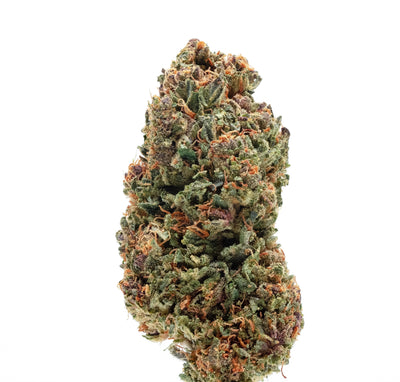
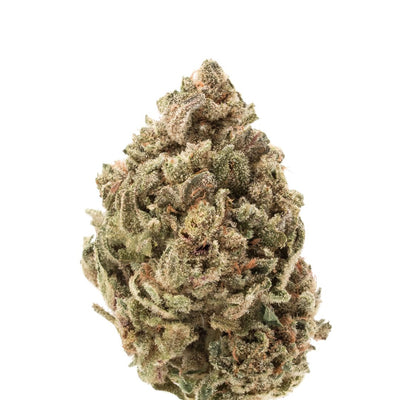
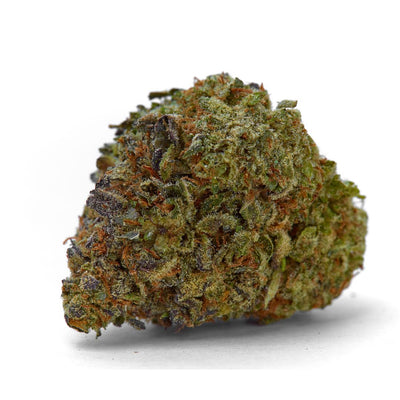
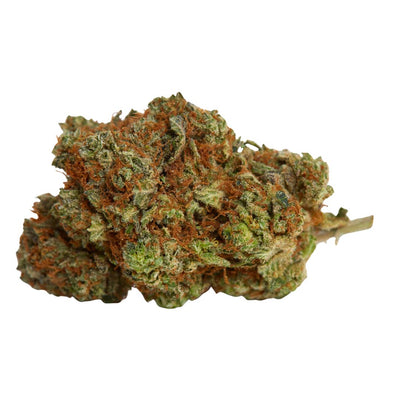
- Break apart cleanly, with visible trichome coverage and orange-amber pistils (the little hair-like structures — a sign the plant was allowed to mature properly)
- Have a sticky-but-not-wet texture — if it crumbles to dust it's been poorly stored or over-dried; if it feels wet or damp it's been poorly dried in the first place
- Smell noticeably different between the unground flower and the freshly ground flower — grind a small amount and the volatile terpenes hit harder; if there's no discernible difference, the terpene content is low
- Produce a cool, smooth smoke — blueberry genetics generally don't produce harsh smoke if the flush (the final watering stage before harvest) was done properly
The UK Market Problem: Why "Blueberry" Gets Misused
The UK CBD flower market has grown significantly since 2019 and now includes genuinely excellent domestic and EU-sourced hemp. But it also has a marketing problem.
"Blueberry" is one of the most searched strain names in the UK, so it gets applied loosely. Some products labelled blueberry CBD flower are:
- Terpene-washed: Plain hemp flower that's had blueberry terpene solution sprayed onto it. This smells like synthetic fruit, burns with a slightly artificial quality, and has no authentic genetic connection to blueberry strains. You can usually detect this by the uniformity of the smell — real terpene profiles are complex and slightly different bud to bud; sprayed flower smells the same throughout.
- Vague genetics: Some "blueberry" products are simply indica-dominant hemp strains with a berry-adjacent smell that doesn't specifically come from blueberry lineage. These aren't necessarily bad products, but they're not what they're being sold as.
- Legitimate blueberry-derived genetics: True blueberry-descended hemp strains bred specifically for high CBD and low THC, with a genuine terpene profile that reflects their lineage. These are the real thing, and they're worth paying slightly more for.
The simplest test: ask for a full Certificate of Analysis (COA) that includes both cannabinoid and terpene data, from a UK-accredited lab. Reputable CBD flower suppliers will have this readily available. If the terpene panel shows myrcene as the dominant terpene alongside detectable ocimene and linalool, you're probably looking at a genuine blueberry profile.
Browse Easy Green CBD's lab-tested CBD flower range →
UK Legal Position on CBD Flower

It would be irresponsible to write a guide to buying CBD flower in the UK without being straight about where the law sits, because it's not simple.
CBD flower occupies a complicated legal position in the UK. Hemp — cannabis with THC content below 0.2% — can be grown legally under licence, and finished CBD products including oils, edibles, and topicals are legal to sell. However, the Home Office's current interpretation of the Misuse of Drugs Act means that smokable CBD flower remains in a legal grey area in the UK, and the FSA does not regulate it as a food supplement in the same way as CBD oils.
This means:
- CBD flower cannot legally be sold labelled for smoking or consumption in the UK
- Reputable UK retailers sell it as a botanical/aromatherapy product
- Possession of CBD flower with a verifiable THC content below the legal threshold has generally not been prosecuted, but this is not a legal guarantee
For a full breakdown of UK CBD law, the Centre for Medicinal Cannabis publishes accessible guidance worth reading if you want the detail.
The situation continues to evolve, and the UK CBD market has lobbied for clearer regulation. Until that arrives, buying from retailers who lab-test their products and are transparent about THC content is the sensible approach.
What Makes Good Blueberry CBD Flower Worth Buying
Cut through the marketing and here's what actually matters:
1. Third-party lab results with terpene data, not just cannabinoids A COA showing 10% CBD is table stakes. A COA showing the terpene profile, residual solvents, pesticide screening, and heavy metals — from a lab that isn't the same one the supplier uses for everything — is what you're actually paying for with a quality product.
2. Visible cure quality Good flower isn't just about potency. Proper curing (typically 4–8 weeks in humidity-controlled conditions) preserves terpenes, produces a smoother smoke, and extends shelf life. Rushed curing produces harsh, green-smelling flower regardless of the underlying genetics.
3. Transparent sourcing Is it UK-grown or EU-imported? Both can be excellent, but know what you're buying. UK-grown hemp faces stricter oversight; Swiss and Italian-origin CBD flower has historically dominated the premium end of the European market. Either way, a supplier should be able to tell you where it was grown.
4. Honest strain descriptions If a supplier describes their blueberry CBD flower as "identical to the original DJ Short Blueberry" or makes claims about specific physiological effects, be sceptical. Good CBD flower descriptions talk about aroma, terpene profile, suggested use occasions, and visual characteristics — not miracle claims.
Our Blueberry Range
At Easy Green CBD, we source blueberry hemp flower with terpene lab results as standard. We're not going to tell you it's the best CBD flower in the UK because that's exactly the kind of claim that's easy to make and impossible to verify. What we can tell you is that it's properly tested, honestly labelled, and grown by cultivators who care about the craft.
If you're comparing strains, it's worth looking at how blueberry profiles sit alongside other indica-dominant options like Gorilla Glue CBD flower or our CBD hash collection if you prefer a concentrates-based experience.
Got questions about a specific batch, terpene data, or what distinguishes different blueberry products? Drop us a message — we'd rather answer a question than lose a customer to a product that isn't right for them.
Further Reading
- Centre for Medicinal Cannabis — UK CBD Market Report — useful data on the state of UK CBD regulation
- Leafly's terpene guide — accessible breakdown of terpene science if you want to go deeper
- FSA Novel Foods guidance on CBD — official UK position on CBD as a food supplement
Easy Green CBD only sells products legal under UK law. All products are third-party lab tested. CBD flower is sold as a botanical product only.